
Generate Full MIDI Tracks for Your DAW in 2026
Yes, modern AI composition tools can generate chords, melodies, bass, and drums as MIDI data ready for your DAW. These tools use machine learning to create musically coherent patterns that you can edit, quantize, and arrange. This guide explains how to export MIDI from AI generators and integrate them into your production workflow. It covers the technical requirements for seamless DAW integration and the creative benefits of using AI as a co-writer. For additional details, review the th3scr1b3 s 365 Days.
MIDI Export Functionality
AI music generators have evolved from simple loop creators to full arrangement engines. A MIDI file is a standard format that stores note data, velocity, and timing information without audio samples. This distinction is critical for producers who want to edit the musical content rather than just play a static audio file. When a tool generates MIDI, it provides the skeleton of the music, allowing you to swap instruments, change scales, and adjust dynamics. For additional details, review the .
Chord and Melody Generation
Chord generation is the foundation of harmonic structure. AI models analyze millions of songs to understand how chords progress in different genres. They can suggest jazz voicings, pop progressions, or ambient pads. Melody generation works by predicting the next likely note based on the current chord and rhythmic context. This ensures that the lead line fits harmonically with the bass and drums. You can export these as separate MIDI tracks or as a combined arrangement. according to 10 Best Chord For additional details, review the Customer Experience.
Bass and Drum Patterns
Bass lines are generated to complement the root notes of the chords while maintaining rhythmic drive. Drum generation is more complex because it involves timing, velocity, and groove. Modern tools can create drum patterns that feel human, adding slight timing variations to avoid a robotic sound. The MIDI export for drums typically maps to General MIDI drum channels or specific kit mappings. This allows you to load your own drum samples into the DAW while keeping the AI-generated rhythm. For additional details, review the Frequently Asked Questions.
DAW Integration
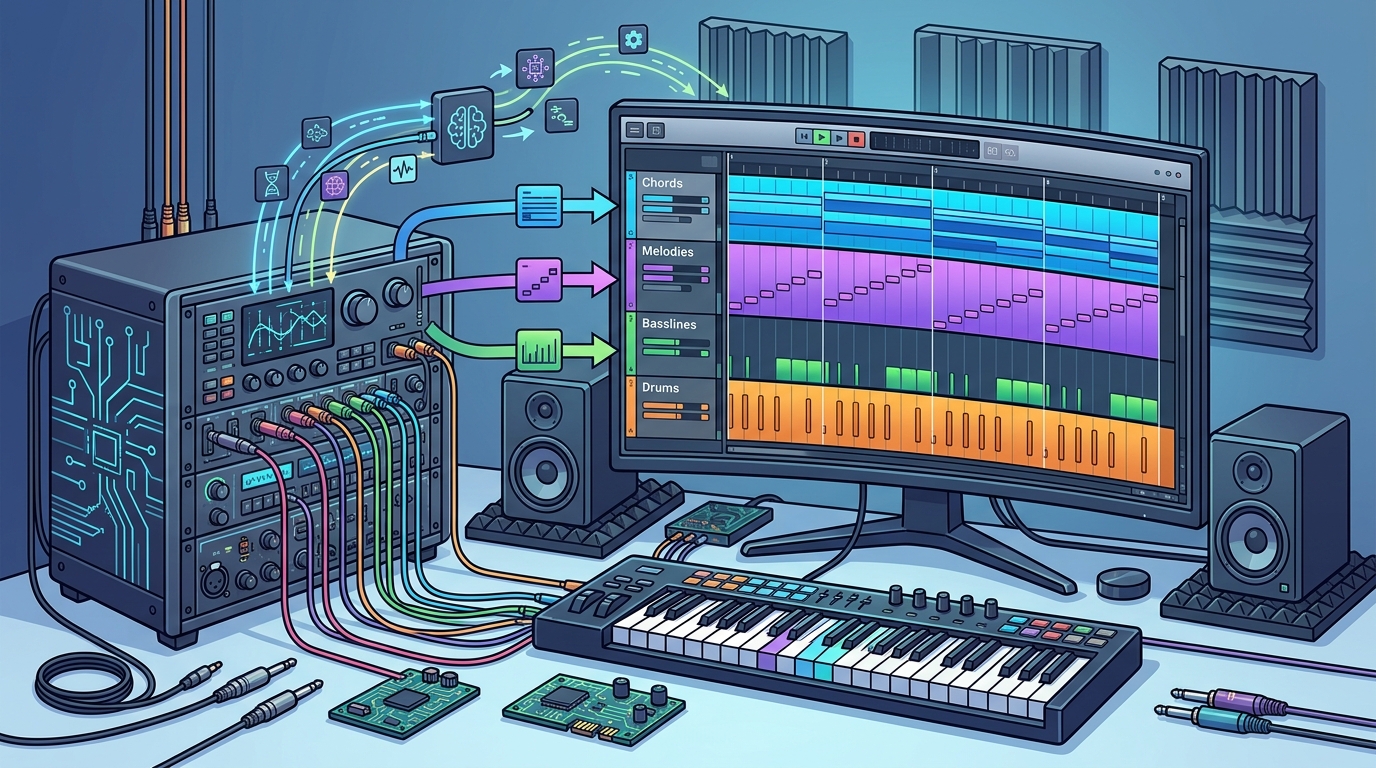
Workflow for Importing MIDI
Editing and Refining AI Output
AI output is a starting point, not a final product. You should edit the MIDI to add human feel and creative intent. Adjust note velocities to create dynamics. Change the scale or key to fit your song. Remove or add notes to improve the flow. This editing process is where your artistic vision takes over. The AI provides the raw material, and you shape it into a finished track. This collaborative approach speeds up the composition process significantly. For additional details, review the About.
Key Takeaways
- AI tools can generate chords, melodies, bass, and drums as editable MIDI data.
- MIDI export allows you to swap instruments and edit notes in your DAW.
- AI-generated drums can be mapped to your own sample kits for unique sound.
- Editing AI output is essential for adding human feel and artistic intent.
- AI acts as a co-writer, providing ideas that you can refine and arrange.
Frequently Asked Questions
Can I edit the MIDI notes after importing them into my DAW?
Yes, MIDI data is fully editable. You can change note pitch, length, velocity, and timing. This allows you to modify the AI-generated content to match your creative vision.
Do AI tools generate audio or MIDI?
Many tools generate both. Audio is a rendered sound, while MIDI is note data. MIDI is preferred for editing and instrument swapping. Audio is useful for quick previews or final rendering.
Which DAWs support AI MIDI plugins?
Is AI-generated music copyrightable?
Copyright laws vary by region. Generally, human creative input is required for copyright protection. Editing and arranging AI output can help establish authorship. Consult legal advice for specific commercial use cases.
Can AI generate drums that sound human?
Yes, modern AI models add timing and velocity variations to mimic human performance. This prevents the robotic feel of perfectly quantized drums. You can further humanize the MIDI in your DAW.
How do I map AI drums to my own samples?
Load your drum samples into a sampler in your DAW. Map the MIDI notes from the AI tool to the corresponding samples. This allows you to keep the rhythm but change the sound.
Do I need to know music theory to use these tools?
Basic knowledge helps, but it is not required. AI tools can suggest chords and melodies that are harmonically correct. You can learn theory by analyzing the AI output and editing it.