
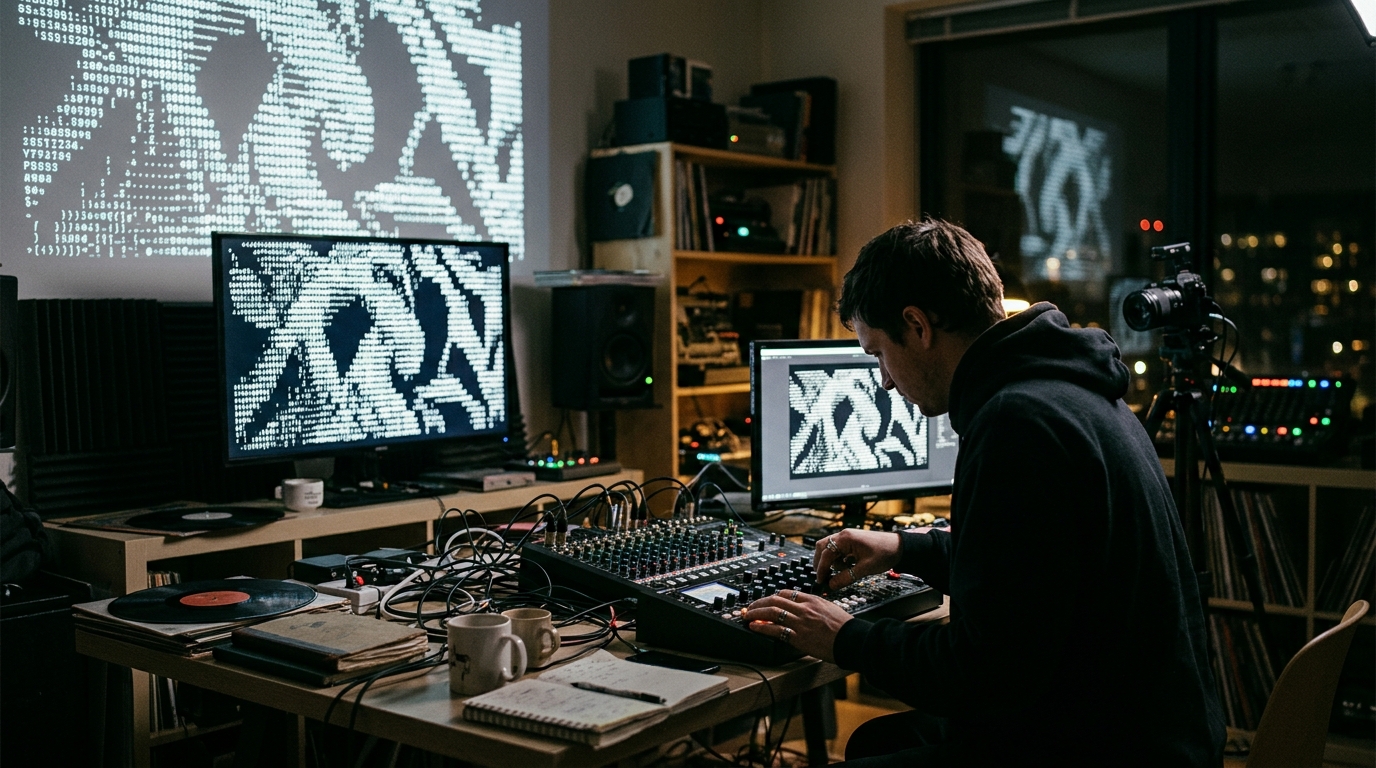
ASCII art streaming transforms live video into monochrome text characters, creating a distinct retro-aesthetic for digital performances. This technique is particularly popular among creators who blend code, poetry, and audio, such as the artist behind th3scr1b3. Selecting the right tool depends on your need for real-time processing, platform compatibility, and visual customization.
1. FFmpeg with ASCII Filters
2. OBS Studio with Custom Scripts
3. Python with OpenCV and NumPy
Best for: Developers who want to build a custom, lightweight ASCII renderer. Python is a flexible language well-suited for image processing. Using libraries like OpenCV and NumPy, you can write a script that captures a video feed, converts it to grayscale, and maps pixels to a character set. This method is highly efficient and can be optimized for low-latency streaming.
4. WebGL-based Browser Tools
Best for: Creators who want to run ASCII effects directly in a web browser without installation. Several web-based tools use WebGL to process video in the browser. These tools are accessible and require no local setup, making them great for quick experiments. However, they may have limitations in terms of character set customization and performance on lower-end hardware.
5. Dedicated ASCII Art Generators
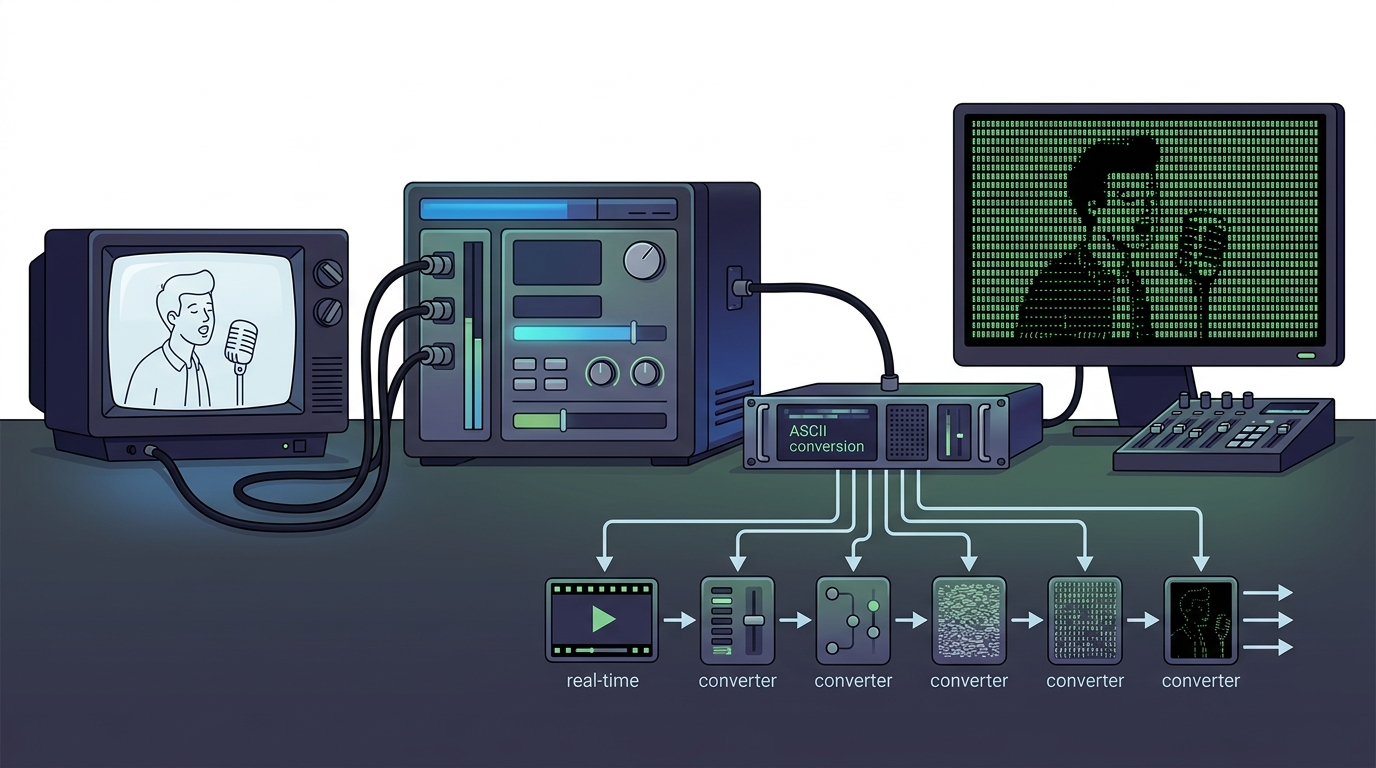
Best for: Users who want a simple, plug-and-play solution with minimal configuration. There are several standalone applications and online services designed specifically for ASCII art generation. These tools often provide a user-friendly interface with presets for different character sets and resolutions. They are ideal for beginners who want to start streaming ASCII art without writing code.
6. Custom Shaders for Game Engines
7. Retro Terminal Emulators with Video Input
Best for: Creators who want to emulate a classic terminal aesthetic with video input. Some terminal emulators and software can accept video input and render it as ASCII art within a terminal window. This creates an authentic retro look that is perfect for poetry, code, or text-based performances. It is a niche but highly effective tool for specific artistic styles.
Choosing the Right Tool
Select a tool based on your technical comfort level and desired output. If you need deep customization and are comfortable with code, FFmpeg or Python are excellent choices. For a simpler, more integrated streaming experience, OBS Studio with a custom script is a strong option. Web-based tools are best for quick, no-installation experiments.
Frequently Asked Questions
Can I use ASCII art for live music streaming?
Yes, ASCII art is a popular visual style for live music streaming. It can be synchronized with audio to create a dynamic, reactive visual experience. Many artists use it to complement their music with a unique, retro aesthetic.
What is the best character set for ASCII art?
Does ASCII art streaming require a high-end computer?
Not necessarily. While a powerful computer can handle more complex effects and higher resolutions, many ASCII art tools are lightweight and can run on modest hardware. The main performance factor is the resolution and frame rate of the video input.
Can I add color to ASCII art?
How do I reduce latency in ASCII art streaming?
Where can I find examples of ASCII art streaming?
You can find examples of ASCII art streaming on various video platforms and social media. Artists like th3scr1b3 showcase this style in their digital performances, blending text, code, and audio into a cohesive artistic experience.